7.25.2007

Gateway Review: Harry Potter and the Order of the Phoenix


Fifth Harry Potter film flawed but not complete failure

After 18 months, one Tri-wizard tournament and the return of "He-Who-Must-Not-Be-Named," the cast of the Harry Potter films is back for Harry Potter and the Order of the Phoenix. While this fifth installment is the darkest yet, the film is a welcome bright spot after the disappointing Harry Potter and the Goblet of Fire.

However, everyone does not share this view. The film has been getting mixed reactions from critics and fans alike. Some rip the film to shreds because it is not faithful to the book, when it actually does a better job than the last two movies. Meanwhile, the other side sometimes calls it the best Potter film yet, which for various reasons it clearly isn't.

The story of Order of the Phoenix is about finding a balance between good and evil. This review is an attempt to see past the absolutes and look at the film objectively.

The film's harsh critics have a fair point about the book's faithfulness. It is natural for many to feel short-changed with so many great scenes and explanations left out from the book.

In particular, the scene where Harry confronts Dumbledore at the end of the book is a glaring omission. Similarly, there not much time spent on the actual Order of the Phoenix itself, a strange decision given the film's title.

However, these harsh critics should remember that at 807 pages, Order of the Phoenix is the longest book in the franchise, while its film version is the shortest at just over two hours.

The film's plot is more straightforward than the book and moves along at a brisk pace. Some might find this inexcusable, but where cuts had to be made director David Yates succeeded in making sure viewers who haven't read the book didn't miss anything important.

In addition to the omitted scenes, the film has other glaring flaws.

Because of poor planning and amateurish editing the film is rushed during important parts and stalls unnecessarily in others. Considering this is the same problem that doomed Goblet of Fire, Order of the Phoenix was lucky to avoid letting this destroy the entire film.

Wooden acting, particularly from female leads Emma Watson as Harry's best friend Hermoine Granger and Katie Leung as Harry's love interest, Cho Chang, also sometimes mars the film.

But this is the exception rather than the rule. The film's all-star cast shines particularly in the case of Imelda Staunton's near-perfect portrayal of despotic Defense Against the Dark Arts teacher Delores Umbridge and in the improved acting talent of Harry Potter himself, Daniel Radcliffe.

These performances support the visually impressive action sequences and special effects, which ultimately make Order of the Phoenix successful. With dementor attacks, large-scale practical jokes, a run-in with the Death Eaters and a world-class wizarding duel, the film succeeds in finding a balance between action and storytelling.

To focus on purely the film's negatives is to overlook a film that has greatly matured over the six years since Sorcerer's Stone debuted in theatres. And similarly, to only look at the film through rose-colored glasses ignores that growing up often includes bumps and bruises. Maturation, growing pains included, is something Hogwarts students have to experience when taking their Ordinary Wizarding Level (O.W.L.'s, more commonly known as "owls") examinations. And in a way, this film was also a test.

In the subject of Harry Potter, David Yates's adaptation isn't "outstanding," nor does it "exceed expectations," but it is certainly "acceptable." And while there may not be a lot for fans and critics to agree on, at the very least they should be glad it wasn't a "troll."

Grade: B-

Originally published on July 24, 2007
© Copyright 2007 Gateway

6.24.2007

1408 Review


1408
a successfully suspenseful Stephen King story


Anytime someone adapts a Stephen King book, it is about as hit and miss as the author himself is sometimes. On the one hand you have novels like Carrie, Pet Semetary and Salem's Lot which have been turned into some truly frightening films and The Green Mile was a King adaptation that nearly won several Academy Awards in 1999. On the other hand you have horrible made for TV movies like The Stand, Desperation, and re-makes of The Shining and Salem's Lot that fell short. So when I heard that King's short story, "1408" from his Everything's Eventual collection I was cautiously optimistic because of the talent that John Cusack brings any time he's on film and
Mikael Hafstrom (Derailed) being attached as director.

All of my expectations were met and then exceeded as we are introduced to Mike Enslin (Cusack) doing research for one of his many books about haunted places to visit. As we soon find out, Enslin is rather cynical about his job, his faith being shattered due to the loss of his daughter because of a disease that is never revealed in the film. Hafstrom doesn't waste time moving the plot along as Enslin gets a postcard from the Dolphin Hotel in New York with the simple message of: "Don't go in 1408" which peaks his interest seeing as how the number 1408 ads up to unlucky 13. Spooky!

And a trip to New York is certainly an unlucky turn of events for Enslin because that, as Enslin's publisher reminds him, is where he used to live with his wife (Mary McCormack) and daughter (Jasmine Jessica Anthony). But we soon get the hint that Enslin marriage failed after the death of his child and he wants to avoid her at all costs. But Enslin reassures his publisher and himself that it will be a quick job, in and out in one night. No harm done.

Those plans go a bit awry when Enslin checks into the hotel, stopped at every turn by the hotel's manager Gerald Olin (Samuel L. Jackson) from entering room 1408. Olin runs down the laundry list of suicides and deaths that have occurred in 1408, stating that no one in 1408 has ever lasted more than an hour. This does nothing but get the cynical Enslin more eager to check the room out which, by virtue of a legal loophole, he is able to force his way in by threatening a lawsuit.

Olin reluctantly sends Enslin off to room 1408 which he immediately and thoroughly analyzes through his tape recorder, robbing of it of any special quality. But as Enslin is wallowing in his cynicism, odd things begin happening in his room. While he writes these initial instances off logically, the strange factor keeps increasing until he wants out of the room. Unfortunately for Enslin, the room has different plans.

1408 is essentially a one-man show for Cusack who has spent the last couple of years in comedies. Luckily for the audience, Cusack gets to work out all that latent aggression and abuse that he has been holding on to since Being John Malkovich. Running the gamut of emotions Cusack works out the entire path of denial to acceptance in an hour, all the while causing the audience to sympathize with a character who is otherwise a huge jerk.

But Cusack is not alone in 1408, with an unusually subdued performance from Jackson and a pleasing performance from McCormack as the confused and spurned wife, the supporting cast helps bolster Cusack's portrayl of Enslin. The only downside to 1408 is that while Cusack succeeds in being believable, some of the things happening in the room are incredibly far out for a haunted hotel room story. However, Hafstrom does succeed in creating a very tangible sense of dread in the film while it's no The Shining, 1408 is definitely a successful and suspenseful Stephen King adaptation.

Grade: B

5.06.2007

Spiderman 3 Review


Spiderman 3
is darker, murkier installment in series


Spiderman is one of those superheroes that people can really relate to; that’s what makes him so popular. As the alter ego of Peter Parker, a college student trying to make his way in New York City as a freelance photographer, finding a balance between paying the rent, falling in love, weeding out moral dilemmas and saving the Big Appl
e is all in a day’s work for the web-slinging crusader. But as a film, Spiderman 3 is probably the most unbalanced and unrelatable.

After the events of the second film, Peter is riding high. Spiderman is loved by everyone, he’s in line for a staff job at the Daily Bugle, and most importantly, he’s finally dating his long-time crush Mary Jane and looking to propose. But as is often the case, things begin to take a turn for the worst.

Still bitter about his father’s death, Peter’s old friend Harry Osborn is plotting his revenge; Flint Marko (Thomas Hayden Church), the man who killed Peter’s Uncle, has broken out of prison; he’s being scooped by a new photographer named Eddie Brock (Topher Grace) who has his eyes on the staff job Peter wants; and despite his best attempts, Mary Jane wants attention that Spiderman just can’t give her.


While these scenarios are all par for the course by now, the problem with
Spiderman 3 is that director Sam Raimi tries to cram each of them into a 2-1/2 hour movie. What makes this so annoying is for the, at most, 30 minutes that Raimi spends on the two actual villains of the movie, the rest of the time is spent on Peter whining about being rejected by Mary Jane and screwed over by Harry. And rather than working through the problem like an adult, Peter becomes the emo version of John Travolta in Saturday Night Fever. These sequences and overall poor dialogue make the movie so cheesy it should cause coronary.

With the time not spent on character development for the newly introduced villains, unlike in the previous movies, it instead gets spent on Kirsten Dunst and James Franco dancing while making omelets and Tobey Maguire visibly forcing himself to cry. This goes on so long that the villains almost seem like an afterthought and by the end of the movie, when we finally get to see the awesome tag-team battle sequence between Spiderman and Harry as the New Green Goblin and Marko as The Sandman and Brock as Venom, we really don’t care what happens to any of them.

When I look back at Spiderman 3, instead of seeing the introduction of one of the coolest arch villains in comic book history, a serious and darker adaptation of the comic (think Batman Begins), and revenge for the sickeningly cotton-candy-sweet ending of Spiderman 2 I can only see unresolved plot holes, cheesy dialogue, undeveloped characters and a hero who has only succeeded in pissing me off. Although, probably not as pissed off as some of the fans of the comics will be with how the movie ends.

And given how the movie ended, I’m not sure what Raimi could do for Spiderman 4; I can only hope that he doesn’t make one right away. Because when I can’t find myself relating to what is supposed to be one of the most relatable superheroes of all time, something is amiss. I think, for a movie with a lesson about making tough choices, the ultimate lesson for Raimi et al should be that when choosing between making a good movie and a popular movie, sometimes a compromise is the best solution.


Grade: C+

4.24.2007

Gateway Review: Grindhouse


Grindhouse
double feature provides action-packed, grade "A" experience

What do a crazed stuntman, an amputee go-go dancer, a Hollywood stunt woman and a swarm of bio-engineered zombies have in common? They're all part of Grindhouse, the best movie of 2007 so far and quite possibly the greatest movie experience I've ever had.

Friday marked the opening of the epic double-feature tribute to the low-budget exploitation films that influenced directors Robert Rodriguez (Sin City, Once Upon a Time in Mexico) and Quentin Tarantino (Kill Bill, Pulp Fiction) to make movies themselves. And boy what a tribute it is.

If you're a fan of gore-filled sci-fi/horror films like Dawn of the Dead, Omega Man or Re-Animator, than you will have a blast with the first of the two films, Rodriguez's Planet Terror. You've heard the storyline before. A toxic chemical has been released into a small town and as people become infected, they terrorize the townspeople who band together to fight off the zombie hoard. And, of course, vixens like Cherry Darling (Rose McGowan), who uses a machine gun for a prosthetic leg, and Dr. Dakota Black (Marley Shelton), who carries a hypodermic needle gun, are just par for the course.

While the film can be dull at times, most of the time it's so completely ridiculous that you can't help but enjoy it. In pure grindhouse fashion, Planet Terror is complete at its most incomplete. With skipping frames, damaged footage and horrible dialogue, Rodriguez gives the audience what it wants.

But the show is not over; after a series of hilarious fake movie trailers from directors like Rob Zombie, Eli Roth and Edgar Wright, it's Tarantino's turn to shine with his homage to road-rage movies like Duel and Vanishing Point.

Compared to Planet Terror, Tarantino is on another level with Death Proof. It stars Kurt Russell in a brilliant performance as Stuntman Mike, a guy who likes to use his "death proof" stunt car to terrorize unsuspecting victims.

But the tables are turned on Stuntman Mike when he encounters four women, including real-life stuntwoman Zoe Bell, who hunt down Stuntman Mike in one of the most gut-wrenching car chase sequences I've ever seen. This film should be a fan favorite regardless, but a fair amount of experience with 70s horror films will make the experience that much sweeter.

As a pair of movies, Planet Terror and Death Proof are both so good at being bad that they are ultimately good. But that doesn't mean that there aren't unintentional flaws. Both films could stand to have 15 to 20 minutes shaved off. In fact, if Grindhouse was trimmed down, I'd venture to say it might be one of the best-made movies in recent memory.

While both may be "B" movies in the truest sense of the word, the Grindhouse experience is definitely grade "A."

Planet Terror: B-; Deathproof: B+; Grindhouse: A

Originally published on April 13, 2006
© Copyright 2007 Gateway

Gateway Review: 2007 Oscar Predictions


And the Oscar goes to... Gateway predictions for the 2007 Academy Awards


Well, it's that time of year again where everyone sits down to watch the stars on the red carpet, make last-minute changes to their ballots and wait in anticipation as the presenters open up the sealed envelope and say those magic words: "And the Oscar goes to ...."

Sunday is the 79th Annual Academy Awards. The theme this year is diversity, with an openly gay host and three African-Americans up for prestigious acting awards.

This is also the first year yours truly has actually watched a majority of the films up for the big awards. Because of this I'm pretty excited about this year's ceremony and seeing how my predictions will do. And that's why I'm here, to help handicap this year's winners.

Am I going to be correct with all my choices? No. But I'm sure you'll keep reading anyway. I mean, you've read this far, right? OK then. Let's get started.

Best Original Song: Dreamgirls is nominated three times in this category, and normally that would mean that the votes would be split. However, the other two nominees are songs from Cars and An Inconvenient Truth, so I don't think there will be any problems. I couldn't tell you what song will win, but I'm sure one of them will.

Best Makeup and Art Direction: There is only one film that can compete in either of these categories and that is Pan's Labryinth. The world that Guillermo Del Toro creates in this film is nothing short of fantastic. And, quite frankly, putting films like The Good Shepherd and Click in the same category is insulting.

Best Costume Design: This award always seems to go to a period piece, and of the nominees, that would be Milena Canonero's work in Marie Antoinette. Other films nominated here are Dreamgirls, The Devil Wears Prada, Curse of the Golden Flower and The Queen. The only one I can see challenging Antoinette here would be Curse of the Golden Flower, but not a lot of people even know what the movie is about.

Best Achievement in Visual Effects: The nominees are Pirates of the Caribbean: Dead Man's Chest, Poseidon and Superman Returns. My gut tells me that Dead Man's Chest will win this thing because of its creature designs for the Kraken and the octopus-like Davey Jones, which were fantastic by the way.

Best Supporting Actor and Actress: This one is pretty simple, Eddie Murphy and Jennifer Hudson will walk away with the golden statues for their performances in Dreamgirls. The wins will provide Hudson with a firm foothold in Hollywood and also give Eddie Murphy a second chance at redeeming his acting career.

Best Actress and Actor: Helen Mirren, for The Queen, and Forest Whitaker, for The Last King of Scotland, have won every single possible award this year. Not surprisingly, the Oscar will be a well-deserved, feather in each of their caps. Both performances were stellar and outpace their respective competition by a wide, wide margin.

Best Director: This year is reminiscent of two years ago when Clint Eastwood won the Best Director Oscar for Million Dollar Baby, besting Martin Scorsese for his work with The Aviator.

Now it's looking like a Scorsese and Eastwood showdown again. Half of the Academy wants to reward Eastwood for his amazing work on both Flags of Our Fathers and Letters for Iwo Jima, and the other half of the Academy wants Scorsese to finally have his Oscar after being snubbed countless times.

Everything points toward this being Scorsese's year. I'm crossing my fingers that he will finally walk away with a little statuette to call his own.

Best Picture: Basically, this category comes down to how much you believe in statistics and tradition. It is almost unheard of that the Best Picture winner isn't directed by the winner of the Best Director award. Now, common sense says that with the most diverse list of nominees in history, the most international film, Babel, is the favorite.

The Departed has Hollywood buzzing like Crash did last year, and if Scorsese does win the Oscar, I think his film could shock a lot of people and, deservedly, win the Oscar as well. If you want a safe pick, go with the likely winner in Babel, but I'm going to take a risk and pick The Departed as my choice for Best Picture of 2006.

Originally published on February 23, 2007
© Copyright 2007 Gateway


The Fountain:
Cotton candy for the mind

Dozens of words could be used to describe the latest film from director and co-writerDarren Aronofsky (Requiem for a Dream), but sadly "good" isn’t one of them.

The Fountain, which stars Hugh Jackman and Aronofsky’s fiancĂ© Rachel Weisz, centers around Izzi (Weisz), who has a brain tumor, and her husband, Tomas (Jackman), a doctor who will stop at nothing to save her from dying.

While this may sound like your typical chick flick, it isn’t. The Fountain is made up of three narratives. One takes place in a book Weisz’s character is writing on her deathbed, where she is the Queen of Spain, looking to find the Fountain of Youth with the help of a conquistador version of Jackman; the second features the couple’s battle with the crippling disease; and the futuristic narrative, where a monk-like Jackman and a big tree travel through a golden-colored nebula in a giant bubble.

As the film jumps between these narratives, Tomas becomes more insecure about the possibility of losing his wife while Izzi comes to terms with her own mortality.

As the film’s title implies, through this crisis, and the three timelines, they are on a quest to find eternal life.

The message of The Fountain will mean different things to different people, but probably for the wrong reasons. By the time you think you figure out what Aronofsky, is trying to say; it makes no sense again.

All is not lost, though. One of the film’s big victories is the eye-popping visuals. The conquistador narrative is short, but features some awesome artistic aspects while the "dream" narrative is truly stunning.

The second positive with The Fountain is the acting of Jackman and Weisz, who each put in fantastic performances despite a weak script and a limited amount of character development. But performances and stunning visuals are not enough to make The Fountain the magnum opus that it wants to be. Instead, it ends up being more like cotton candy; it tastes sweet but ultimately, the bulk of it is just a bunch of empty air.

At a run-time of 96 minutes, The Fountain is never dull, but is almost always confusing. People going to this film expecting, as the film’s marketing would have you believe, a classic love story that spans the centuries, are going to be sorely disappointed. However, if you want to pay $8 to essentially experience the film equivalent of an acid trip (I'm assuming ), then The Fountain is certainly worth a try.

Grade: C-

Originally published on November 28, 2006
© Copyright 2006 Gateway

Gateway Review: Best/Worst Scary Movies Ever

Top 5 Horror Movies

5. Haute Tension (2003) - Directed by Alexandre Aja
Haute Tension is a French horror film that I heard about through word of mouth in 2004. According to my favorite horror movie Web sites and blogs, it was supposed to be a one of the best horror movies to come out years, so obviously I went to check it out. The film not only lived up to the hype, but also surpassed my wildest expectations as the first film since I first saw Jurassic Park in 1993 to scare the living hell out of me. Haute Tension is a gritty, bloody and suspenseful slasher film that grabs you by the pit of your stomach from the first 20 minutes and never lets go.

4. The Blair Witch Project (1999) - Directed by Daniel Myrick and Eduardo Sanchez
The Blair Witch Project is a film that people are either going to love or hate; I'm obviously in the "love it" group. What can I say? I'm a sucker for the minimalist approach they used and it probably helps having a personal experience of being lost in the woods to make this movie's scares really hit home. Personal experiences aside, I still think the last 20 minutes of the movie are some of the most disturbing and frightening I've ever seen.

3. The Ring/Ringu (2002/1998) - Directed by Gore Verbinski/Hideo Nakata
Both versions of this movie, the Japanese original and the American remake, are equally frightening. However, my vote would have to go to the American remake. More of an unsettling, atmospheric film, The Ring is just so cool to watch because it breaks a lot of horror movie rules. The movie also contains some magnificent performances from Naomi Watts and Brian Cox, which makes it better than any horror movie remake has the right to be.

2. Halloween (1978) - Directed by John Carpenter
I've watched Carpenter's classic every Halloween for five years and it still captivates me. There are just so many creative elements to this film, especially the use of first-person POV shots where you actually see through the eyes of the killer. The effect had been used in Black Christmas previously, but was perfected by Carpenter. The movie's score, low-budget style and ability to break down the idea of the cozy and safe "suburbia" lifestyle just make this movie so entertaining to watch.

1. The Exorcist (1973) - Directed by William Friedkin
The Exorcist isn't just one of my favorite horror movies, it's one of my favorite movies, period. I think the music is perfect, the acting is phenomenal, the build up is properly paced and some scenes just chill you to the marrow. One scene that still freaks me out is the "spider walk" scene; my blood turns to ice every time I see it, even though I know it's coming. And the film isn't just technically sound, it's very premise of possession is just personally one of the most psychologically terrifying things I've ever seen on film.

Worst 5 Horror Movies:

5. Ju-On/The Grudge (2003/2004) - Directed by Takashi Shimizu
I saw Ju-On on the recommendation of several Asian horror Web sites that said it was one of the best horror films to come out of Japan since The Ring. Unlike Haute Tension, I watched the movie and just couldn't understand the hype. I could handle the croaking voice and even the idea that the main character was being terrorized by a "curse," but hiding under the bed as protection was too much to stomach. What's sad is that the American version was worse than the Japanese one, and that in itself is more terrifying than either movie tries to be.

4. Suspiria (1977) - Directed by Dario Argento
I saw Suspiria at the Dundee Theatre after hearing repeatedly that it was one of the best horror movies of the '70s. I went in to see the movie expecting to see something suspenseful, terrifying and bloody; what I got instead was a big steaming pile of s*&#. Suspiria is beautifully shot, but that's about it. The movie gets lost in a pointless story and cheap attempts to be "scary," rendering the film a total joke. I suggest avoiding this one at all costs.

3. Poltergeist III (1988) - Directed by Gary Sherman
I'm a fan of Poltergeist; it's actually one of my favorite horror movies. However, Poltergeist III is just atrocious. It has horrible acting, a horrible script and a weak bad guy. Honestly, any movie that's biggest scares involve a malfunctioning elevator and a "bottomless" puddle of water in a parking garage is really reaching for a plot. Hell, I've seen the movie more than I'd readily admit to in public and I'm still not sure what the plot of the movie was.

2. An American Haunting (2006) - Directed by Courtney Solomon
With An American Haunting you have two veterans of horror movie classics in Sissy Spacek and Donald Sutherland, as well as up-and-coming young star in Rachel Hurd-Wood. A veteran cast like that in a movie about spirits haunting a small farm house in the 1800s sounds like it should be pretty good, right? Unfortunately, the movie is less about possession and poltergeists and more of a morality play about child abuse. An American Haunting is more of an after-school special than it is a horror movie. Too bad I actually paid to see it in theatres.

1. Godsend (2004) - Directed by Nick Hamm
I thought the idea behind Godsend was a good one. A child is killed, cloned, and then brought back to life, but something's not right with him. It's definitely a plot that could be worked into a decent suspense or horror movie. Something apparently got lost in translation because everything, and I mean everything, about this movie fails. Godsend tries to be like The Omen, but ends up being a 102-minute argument about the dangers cloning. This movie is just painfully bad, even for a horror movie.

Originally published on October 31, 2006
© Copyright 2006 Gateway

Gateway Review: The Prestige


The Prestige
tries too hard to trick audience, doesn't live up to hype

The Prestige, the latest film from Batman Begins collaborators Christopher Nolan, Christian Bale and Michael Caine, takes its name from the third and final part of a magician's act. The prestige, as Caine explains in the film, is the part of a magic trick "with the twists and turns, where lives hang in the balance and you see something shocking you've never seen before."

While there was no shortage of entertaining twists and turns in the film, I can think of several other s-words that more accurately describe them.

The Prestige, also starring a surprisingly skillful Hugh Jackman, tells the story of two apprentice magicians who become bitter rivals when a mistake by Bale's character, Alfred Borden, causes a magic trick to go awry, killing the wife of Jackman's character, Rupert Angier.

The storyline is revealed in a style common to the Nolan clan. Nolan's younger brother Jonathan wrote the film, based on Christopher Priest's novel, in the pair's first collaboration since the critically acclaimed Memento. Opening with the trial and subsequent sentence of Borden for Angier's murder, we see the friends' rivalry evolve through flashbacks, testimony and dictated journal entries.

The film does a good job of showcasing the acting chops of all involved, minus a horribly miscast Scarlett Johansson, but leaves you scratching your head, not because of the excellent storytelling abilities of the younger Nolan brother, but a complete lack of them. At the end of this nearly two-and-a-half-hour movie, I actually cared less about the characters than I did when I took my seat.

The problem is that viewers aren't given any reason to like the two main characters, or at the very least sympathize with them. Too quick to rush to the rivalry, the film does little to show you that these two magicians were actually friends at one point. So when you see the magicians staking out each other's performances, using spies to grab secrets and openly sabotaging each other's shows, it's like watching two adults throwing pointless temper tantrums.

Now, don't get me wrong, the film can be damned entertaining at times. Many of the tricks were clever and the underlying story of obsession was actually quite interesting.

However, after being impressed at how skilled the Nolan brothers are behind the camera in their previous projects, I was disappointed at all of the loopholes and convenient plot devices used for the final "gotcha" moment.

Maybe I'm being too harsh, but I just think a movie that makes no secret of trying to trick the audience shouldn't explain away the entire film in the final 10 minutes. It gives you no reason to come back and see the film again, or at least discuss the film later with friends. Just like the characters, there is no reason to care about the film.

The bottom line is that if you're looking to spend some time at the movies in the coming weeks you could do better than The Prestige, but certainly do a hell of lot worse. Just be sure, if you do decide to go see the film, to check your brain at the door. Unfortunately, you won't be needing it.

Grade: C+

Originally published on October 24, 2006
© Copyright 2006 Gateway

Gateway Review: V for Vendetta


V for Vendetta
is vivaciously victorious

In the late 1980s, Alan Moore and David Lloyd wrote the graphic novel V for Vendetta. Luckily for moviegoers, the writer / director tandem of Andy and Larry Wachowski picked it up and gave Moore's work the Hollywood treatment.

The original release date for the film version of V for Vendetta was actually Nov. 5 of last year, to coincide with Guy Fawkes Night, a British holiday commemorating the attempt to burn the British Parliament in 1605. The film was pushed to March when Warner Brothers, the film's distributor, cited the need for more post production work. But it's rumored to be that the company did not want to risk a backlash, given the bombings in London that summer.

In the Wachowskis' first film since the Matrix sequels, they actually only wrote the screenplay and handed the directorial reigns over to James McTeigue, a long-time assistant director who worked on films including the Matrix trilogy and the recent Star Wars prequels. Ironically, McTeigue plucked his stars from those sagas'; Benchwarmers now turned superstars.

Receiving top billing for this project was the scene-stealing actress from the Star Wars prequels, Natalie Portman, who plays the part of Evey Hammond, a clerical worker for the British Television Network in a futuristic London. We are introduced to her in the film as she is trying to avoid detection in the city's dark alleys during the enforcement of a strict curfew.

She is spotted by a group of police officers, and under the threat of being taken into custody, resigns herself to being abused by the trio of officers. Before anything can happen, a cloaked figure wearing a Guy Fawkes mask and carrying a convenient set of throwing knives appears from the shadows to take out Evey's assailants.

This masked man, introduced to the audience simply as "V," is played to perfection by Hugo Weaving, who may best be remembered as Agent Smith in the Matrix movies. After being saved by V, Evey follows her rescuer to a first-class seat for his personal "explosive" tribute to the Nov. 5 holiday. Watching in horror and fear, Evey realizes that she has gotten herself in to something bigger than she could have ever expected.

V follows his display by making a threatening declaration to again attack the government in one year's time. Furious and fearful, High Chancellor Sutler, played wonderfully by John Hurt, orders the government to track down the perpetrator of the terrorist action and the female accomplice before they can strike again.

The film goes on to jump between V and Evey's relationship and the exploration of V's past through an investigation by the government's lead detective, Eric Finch, played by Stephen Rea, best known for his starring role in The Crying Game. Finch, who is cautious of his government to begin with, becomes more so as he digs deeper and deeper into V's past, learning quite a lot that the government is keeping from their citizens.

V for Vendetta has been publicly condemned and has been the subject of recent controversy in the press, with some critics citing that the film condones and even promotes terrorism. The negative press did not deter audiences or reviewers, however; the film has received critical acclaim and is the number one film in America.

Quite simply, the public has gotten it right. V for Vendetta is one of the best theatrical experiences in recent memory and the word is that the IMAX version is even better. Filled with stellar leading performances, V is an emotionally relevant story that keeps you glued to your seat. It has colorfully excellent cinematography, and one of the best ending sequences in recent memory. The final verdict is that V for Vendetta is better than good, it is the first "must see" film of 2006.

Grade: B+

Originally published on March 21, 2006
© Copyright 2006 Gateway

Gateway Review: The Pink Panther


Martin is worthy successor to Sellers in new addition to Panther series

In 1963, the legendary Peter Sellers starred in a small film called The Pink Panther, a movie that would later be nominated for an Oscar, a Golden Globe, a BAFTA and a Grammy Award. Today, The Pink Panther is considered a classic film and one of the best films in Sellers' career.

When Sony Pictures decided to add a new version of the classical film series for a younger generation, it was a task that needed to be approached with either great caution or reckless disregard. Somehow the team of Steve Martin, Kevin Kline and Jean Reno, under the supervision of director Shawn Levy, found a way to not only do both, but do it well.

This version of The Pink Panther is actually a prequel to the Peter Sellers version. It involves detective Jacques Clouseau as a simple French policeman who is called up by Chief Inspector Dreyfus, played by Kevin Kline, to help investigate the murder of Yves Gluant, played by The Transporter's Jason Statham, and the robbery of his trademark piece of jewelry, the Pink Panther diamond.

Dreyfus does not disguise his ulterior motives from Clouseau, stating that he wants Clouseau as a decoy for the press until he can form his own investigation. When Clouseau drops the ball, Dreyfus would then pick up the case with the ultimate goal of finally winning the French Medal of Honor after being nominated seven times in the past and never winning.

This premise works remarkably well for the film, and from the very first scenes, you get pulled in to the world of the bumbling detective and trade off between laughing at Clouseau and laughing with Clouseau. The packed crowd watching the preview enjoyed every minute of it, only pausing to take a breath before belting out laughter. The crowd even stood up and cheered for Martin's performance.

One of the questions on everybody's mind is how Beyonce Knowles does in her role as Xania, girlfriend of Gluant and a suspect in the Pink Panther case. The answer is that Knowles does surprisingly well for what her role allows, and that is just fine, because one senses when watching the film that Knowles' skills, if overused, could fall under the old adage of "too much of a good thing." The only real problem with Knowles is that she is given a platform to sing in a seemingly unnecessary scene near the end of the film. But if her presence helps bring people to the movie, then it will prove to be a successful casting choice.

If there is one glaring problem with the film, it is that Clouseau is sometimes shown as much smarter than he actually is, or should be, given his body of work. Despite the humor being a bit too obvious and the plot being relatively simplistic, the choices made are understandable. This is being primarily pitched as a children's film and definitely succeeds in providing an enjoyable experience for parents and kids alike.

Thanks to the still hilarious and studious acting of the film's star, Martin, The Pink Panther is without a doubt the best kind of plain and harmless fun. This is what movies today should be: An escape from reality where you can kick back and relax and watch someone else screw things up, even if it is only for a stingy 90-minute runtime that almost seems to be too short, and leaves you wanting more.

Grade: B-

Originally published Feb. 10, 2006
© Copyright 2006 Gateway

1.01.2007

Movie Blurbs 2

Casino Royale (2006)
Starring: Daniel Craig, Eva Green, and Mads Mikkelsen
Directed by: Martin Campbell
Rating: **** out of 5

I haven't seen many James Bond movies, and maybe that's because I can't handle the really old movies that are ripe with that 1960s charm and I can't stand the newer 90s movies that are all action, no substance. However, Casino Royale was an amazing ride. Daniel Craig is the perfect brooding James Bond and the plot is simple, with an unexpected twist, and tons of high-octane action. I was more than pleasantly surprised with this one. This is a must see.


Fearless (2006)
Starring: Jet Li
Directed by: Ronny Yu
Rating: *** out of 5
Eh. That's how I felt immediately after seeing Jet Li's Fearless and that's how I still feel. Don't get me wrong, there are some awesome wire-fu moments here and I love the message of the story, my problem it is that it's nothing new. There is nothing new here in Fearless and it's like watching a hodge-podge of House of Flying Daggers, Hero, and Crouching Tiger, Hidden Dragon, but written and directed like XXX. I've seen better martial arts movies and I've seen better martial arts movies from Jet Li. Worth a rental, but that's about it.


Grave of the Fireflies (1988)
Starring: Tsutomu Tatsumi and Ayano Shiraishi
Directed by: Isao Takahata
Rating: ****-1/2 out of 5

Grave of the Fireflies is one of those movies that you want to see, but at the same time you can't bear to watch it. The first thing that you notice with this movie is the spectacular animation, you can't help but notice because the opening fire-bombing sequence is so haunting. But what this movie has that most animated features don't, is a solid story that is harrowing and passionate, but at the same time crushingly sad. The movie itself is depressing, but when you're talking about World War II and bombing raids on Japanese villages, it would be a disservice not to be. The best you can hope for is that the movie inspires people to think and cherish the things, and people, that they have around them that they might otherwise take for granted. A must see.

Fullmetal Alchemist: The Conqueror of Shambala (2005)
Starring: Romi Pak and Rie Kugimiya
Directed by: Seiji Mizushima
Rating: ***-1/2 out of 5

Fullmetal Alchemist is one of my favorite television series, so I was highly anticipating the movie... and I wasn't dissapointed. This was a good, but not great ending to the series. Much like Grave of the Fireflies, this movie deals with depressing and heavy issues (Hitler and the rise of Nazism) and is coupled with magnificent animation. My only problem with the movie is that I'm not really sure what it accomplished. The story was okay, nothing great, but still better than I was expecting from an anime spin-off movie... which is part of the other problem: Even though they give you a rundown of what the series was about, you'll need to see the series to understand anything in the movie the way you really should. Would reccomend, more-so to someone who's seen the series.


Lady Vengeance (2005)
Starring: Yeong-ae-Lee and Min-sik Choi
Directed by: Chan-wook Park
Rating: **** out of 5

Lady Vengeance is the third and final film in Chan-wook Park's Vengeance Trilogy and it was very, very good. The film tells the story of a woman who is robbed of her daughter and put in prison after taking the rap for a murder her then-boyfriend commited and then, after milking the connections she made while in prison, tracks him down. The thing that Park does in all of these movies, the best being the fantastic Oldboy, is show the humanity of revenge. You empathize with the "bad guy" much like you would in a spaghetti western... you follow the path of a gunslinger whose goal is no better than the actual crimes of the person she is going after... and yet you find yourself rooting for her. You find that murder isn't as black and white as it seems, but it is still always good, as Guem-ja says in the movie, to "live white."

12.30.2006

Strange Days


Strange Days (1995)

Starring: Ralph Fiennes, Angela Bassett, and Juliette Lewis
Directed by: Kathryn Bigelow
Rating: ****

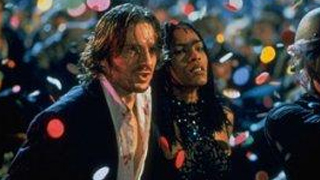
The year is 1999, the world (or at least Los Angeles) is in choas with gangs running wild in the streets, pseduo-martial law enacted, religious prophesiers claiming it's the end of the world and from the looks of things, it very well might be. But don't tell that to ex-vice cop Lenny Nero (Fiennes), true to his name, makes a living (if you can call it that) off of selling people's memories as virtual reality experiences. Now, these aren't any ordinary memories that Lenny sells, no, he sells, to put it bluntly, smut... you know, things like an 18-year-old girl showering herself to a 40-something lawyer looking for the "thrill" of cheating on his wife without actually doing the deed... so to speak. However, Lenny has guidelines and won't deal in memories of people killing or being killed.

While most of us would willingly fork over mounds of cash to be someone else, even for just a short while, we can't.... and technically, neither can Lenny; you see, the device used to record and transmit these memories is federal issue and illegal for civilian use. So Lenny is constantly on the down-low, meeting with people in the back-rooms of bars and in small garages to make deals... in his spare time, he wires himself up, playing back memories of a lost flame named Faith (Juliette Lewis) who left Lenny for some reason that is never explained in the film. However, Faith is still hanging around in Los Angeles, weighing down the arm of a hot-shot manager named Philo (Michael Wincott) who manages a high-profile, highly outspoken gangsta rapper named Jerchio-One (think Tupac Shakur meets Bob Marley) who is suddenly murdered.

You see, Lenny is still head-over-heels in love with Faith, and so he makes the usual, Say Anything gestures like slinking around Philo's club where Faith performs. Lenny does this fairly regularly and, for his troubles, also gets the shit kicked out of him by Philo's bodyguards regularly and gets shot down by Faith regularly. Now, while this may seem like a poor excuse for a romantic comedy with cyberpunk thrown in for a little flair, it's not. The story picks up when a VR tape addressed to Lenny shows the murder of a prostitute he and Faith were friendly with while they were dating. Lenny, with this help of his martial-artist escort Mace (Angela Bassett) set forth to try to solve the murder.

However, in the process of trying to solve this first murder, Lenny and Mace begin unravelling a tangeled web of lies and cover-ups that all lead back to the murder of Philo's number-one client, the outspoken Jericho-One. Being a cop, Lenny begins to put the peices together and realizes that his old flame Faith may be in danger, and he has to try and solve the mystery before she's killed. But unfortunately for Lenny, every clue creates more questions than answers and soon makes Lenny a target himself as he uncovers a coverup running deeper than he ever could have immagined.

Using elements from the Thriller genre, Science Fiction genre, and a surprising ammount from the Film-Noir genre, Strange Days, really surprised me as a very smart, well crafted cyberpunk thriller that doesn't take its audience for granted. The special effects andtechnical aspects of this film are very well done, and this movie would have been solidified as an instant classic if it hadn't been for the execution of the film's "whodunnit" mystery sub-plots. While a "gotcha" ending wasn't what I was expecting, and was happy it was there, the weight of the surprise was lessened by poor character development and wooden acting.

Acting: ***-1/2
The acting was alright for this kind of a movie... better than most paper-thin science-fiction movie dialogue. The major kudos here go to Ralph Fiennes as Lenny Nero, who is very nearly in every scene and creates a level of depth to a character that could have otherwise been very forgettable. Everyone else was alright, with some surprising moments from Vincent D'Onofrio playing a crooked cop, but my major beef is with Juliette Lewis. Lewis was her usual, so-so self in this film... playing a jaded, manipulative ex-prostitue. She actually had me pulled in as the prototypical film-noir femme fatale, but when it was needed the most, Lewis fell flat and couldn't deliever. Ray Fiennes makes a damned good substitute for Humphrey Bogart, but Juliette Lewis is definately no Lauren Bacall.

Plot: ***1-/2
The plot kept me interested... I'm not going to lie, even though the movie is probably too long for its own good (2-1/2 hours? Really?) with some worthless backstory, needless fighting scenes, and a overly-lengthy ammount of time spent on Juliette Lewis' stage performances. The pluses here were the twist ending which I was honestly caught off guard by, even though I shouldn't have. I'm not going to ruin it, but James Cameron (the film's screenwriter) does a fantastic job of showing characters in the right way to make you think twice about the motives of those you really shouldn't be. Also, I really enjoyed the sci-fi aspect of the film... the virtual reality idea, while logistically rediculous for a movie set only 4 years in the future (meanwhile it doesn't look like pop-culture has moved a day past April 24, 1992), it was a good plot device and effective deus-ex machina.

Cinematography: ****
A really, really superb effort from Matthew Leonetti here as he's able to do some great 1st person POV shots for the VR sequences and also create that classic film-noir mise-en-scene. I only remember one scene shot during the day time, the rest of the movie it shot in night-for-night. This allows for some really amazing contrasts in the last hour or so of the movie which takes place New Years Eve in the center of a massive party. Not only did the lighting here had to be perfect for many of the shots Bigelow's shots, but the execution of the camera movements had to be like clockwork to get that true-to-life VR experience.

Direction: ****
Katheryn Bigelow is a director who likes to take chances and that much is pretty obvious when watching this movie. She didn't want to have a typical crime thriller, she didn't want to have a typical cyberpunk movie, she didn't want to do things by the book, she wanted to go out and experiement. Now, granted, the experiments didn't all turn out like they should have, some of the plot could have been axed and replaced to flush out the other characters more and some of the key participants should have been more integral to the overall storyline than they were and others who weren't as integral should have been less so, but on the whole, the story flows very nicely and the movie has just the right balance of action and intellegence.

Entertainment Value: ****-1/2
Entertainment value is something Strange Days has in spades. It is the major redeeming quality of this movie and what will make me want to watch it again and again. It is a 2-1/2 hour movie that really only feels like 1 and that's saying something for how drawn out some of the scenes actually are. There is a great pace to the movie, the time isn't spent on building up the characters and then going to the action, the action is what facilities the buildup of the characters, and the villains and heros in this movie are pretty clear cut which could be a flaw, but in a movie like this, that's how they are supposed to be... with the exception of that one character who plays the role of the film's "surprise," which, also is another reason for the film being highly entertaining. You get VR POV sequences, club rave sequences, car-chase sequences and hand-to-hand comabt sequences in a movie that for all intents and purposes really is a neo-noir. What more could you want?

I reccomend this film for someone who is looking to enjoy a smart action movie... and not Matrix psuedo-philosophical smart, but really and genuinely topical. The movie doesn't come out and say it, but there are poweful themes of love, trust, honor, and power that are food for thought once those final credits role. This movie "exeperience" isn't perfect and at times can be down-right silly... but those moments are few and far between... and if you're like me, you won't notice them until afterwards anyways... just like a good movie is supposed to do.

So with those explinations we get these final ratings:

Acting: ***-1/2
Plot: ***-1/2
Cinematography: ****
Direction: ****
Entertainment Value: ****-1/2

and the final total of **** of 5 for Strange Days.

8.07.2006

Sunset Blvd.


Sunset Blvd. (1950)

Starring: William Holden, Gloria Swanson and Nancy Olson
Directed by: Billy Wilder
Rating: ****-1/2


After having been a fan of the noir style and emersing myself in neo-noir films like Blade Runner/The Matrix or noir-esque dark comedies like The Big Lebowski or Fight Club I thought I would take a crack at the classic noir films and slowly but surely I've been working my way through some of them... Carol Reed's The Third Man, Hitchcock's Shadow of a Doubt and Roman Polanski's Chinatown is on my shelf ready to be watched... but now has the bar set pretty high after I have seen the masterpeice that is Billy Wilder's Sunset Blvd.

Telling the story of mildly heralded B-movie writer named Joe Gillis (Holden) who is down on his luck and after some initial success can't sell a script to save his life (almost reminiscent of the Coen Brothers' Barton Fink character) and so while hopskotching across Hollywood trying to elude some repo men who have come for his car, he stumbles in to the dusty, old, and he thinks empty million dollar mansion of former silent movie star Norma Desmond (Swanson) who, in fact, still lives there. She mistakes Gillis for a delivery man who is dropping off a coffin for her recently desceased chimpanzee. Gillis admits his mistake and is in a hurry to get out of this insane woman's house, but when he mentions that he's a writer, Ms. Desmond ropes him in to writing the script for her big "don't call it a comeback" return to celluloid.

Both leads put on magnificent performances with Gillis as the subdued but cutthroat writer trying to make it in Hollywood, but it's Gloria Swanson, a former silent film actress herself, who goes so close to edge of parody in her portrail of a spurned actress that was tossed aside in the era of the "talkies" like many other actresses in Hollywood. What is so interesting about this character, who IS a character in the true sense of the word, is how sympathetic you are of her situation because everyone has that dream to be a Hollywood star and make it big. Swanson's over the top acting is also the perfect foil for the low-key Gillis who seemingly is in the same trappings as the woman who has trapped him in her home. There is a very Kathy Bates as Annie Wilkes in Misery performance where melancholy is too nice of a word.

What also makes Sunset Blvd. so captivating is how much personal baggage is brought in to the film through on location shooting and cameos from big-name players like Cecil B. DeMille, Buster Keaton and H.B. Warner to make it a truely scathing take on the Hollywood machine mindset. Even Max ,the well meaning but ultimately damning butler/former director/former husband of Norma Desmond, played by former director Eric von Stroheim (who actually directed Swanson in the film that killed her career) brings so much truth to the words he speaks both when trying to protect Desmond from rejection and from the facade that had been put on by Gillis in trying to take advantage of his vein and lonely employer.

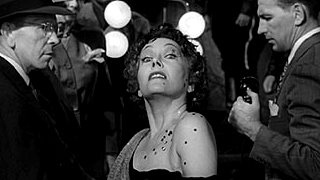
There were just so many small touches, mainly in the set design of Desmond's mansion, that really impacted the final message of the film including the home movie theater, the numerous silent-era pictures of the 50-something Desmond and turn on a dime reactions of Norma Desmond when she hears something she doesn't like or doesn't want to believe create a suspenseful atmosphere that is ultimately just a very sad look at how brutal Hollywood can be. A message that is captured perfectly in the haunting ending sequence of Swanson descending the staircase of her mansion, putting on her actress charm which now reeks with delusions of grandeur, as she is being led to a police car with news crews shooting. Her final lines as the audience is treated (or subjected) to a first person shot of Desmond creeping toward the camera lense are true to the film's dark look at the optimism of the American dream: "Alright Mr. DeMille, I'm ready for my close up."

This film left me more chilled to the bone and yet hopelessly captivated more than most horror or suspense films I have seen. Just, the Citizen Kane-like character of Norma Desmond is so sympathetic but at the same time horribly dangerous (as Gillis, our narrator explains throughout his encounters including one very creepy New Years Party scene) that it just terrifies you that you could understand what she's been through and what she is going through having to deal with rejection. In an era of idol worship where stars are on a constant make or break pedastal, this film is as impactful and unwaveringly revealing as it was over 50 years ago.

Acting: *****
Teriffic performances all around from the leading actor and actress to the supporting cast to the extras. Obviously the major props here go to Swanson and Holden which is why the won the Golden Globes that year. Enough has been said about the acting in this film by myself and countless others already though, so no need to go in to it further.

Plot: ****
The plot for Sunset Blvd. is very good... although I felt it could have been a bit tighter in some places. The direction was near perfection to get the message across alright in the end, and key scenes in the plot were neccessary to get the desired effect in the end... although I think the (poor) attempt to hide the otherwise shocking ending through the opening narration was handeled badly (although the opening scene itself was magnificently shot) and the scene where we find out how the opening came to be (in classic noir fashion) almost seemed too forced. I thought it could have been more subtle.

Cinematography: *****
Another perfect example of art direction/cinematography/set design in this film. Just absolutely fabulous from the home movie scene where Norma Desmond's nosferatu-style shadow is cast on the screen while she's grabbing at the projecton light as if to attempt to hold it in her hands all the way to the perfectly shot staircase sequence. There was nothing at all to nitpick about how the film unfolded visually.

Direction: ****-1/2
Billy Wilder is a great director as evidenced by his track record of films before and after Sunset Blvd. (Double Indemnity, Stalag 17, Sabrina, Some Like it Hot) and there is nothing to discredit that assessment in Sunset Blvd. his casting choices, his choice of scenes, his use of dissolves and camera shot changes were all planned to their full effect. I think some of the story appeard a bit muddled in places and could have been tightened which, considering he helped write the script, falls on his head which is why he doesn't get a five-star rating.

Entertainment Value: ****-1/2
Entertaining is a word that you really can't use when describing Sunset Blvd... because of how dark and cynical its world view is. However, through all of the peices that described above, Sunset Blvd. is certainly CAPTIVATING and not only is it captivating, but it is so very strongly held together through getting the audience to be lost in the mood, the characters, the plot, and the meaning behind the story. There are parts of the film however that had me nervous as to whether or not I could keep being involved... but I think upon a second viewing, this movie will captivate me fully for the enitre 1 hour and 50 minutes.

I highly reccomend this film not only for noir fans, or even enthusiasts about film... but anyone who has ever had the dream of going to Hollywood, or has wished for even a second to be like the movie stars on television, Sunset Blvd. will shatter that dream in to millions of little peices just like the shattered psyche of Norma Desmond. This is a much darker, must more scathing Citizen Kane and, in my opinion, more effective and rewarding as a film.

So with those explinations we get these final ratings:

Acting: *****
Plot: ****
Cinematography: *****
Direction: ****-1/2
Entertainment Value: ****-1/2

and the final total of ****-1/2 out of 5 for Sunset Blvd.

8.06.2006

Movie Blurbs

Normally I do a full-length review of a film, and over time I hope to go back and try and do as many as I can when I get free time or a movie I see catches my interest... but I also feel like giving reviews of movies that I've seen that I just haven't gotten around to giving the full rundown yet...

So, here are about a half of a dozen films I've seen recently and my short take on them:

Kiss, Kiss, Bang, Bang (2005)
Starring: Robert Downey Jr., Val Kilmer and Michelle Monaghan
Directed by: Shane Black
Rating: **** out of 5

Kiss, Kiss, Bang, Bang is a hilarious dark comedy that is top-notch on all cylinders. Downey plays the bumbling pathological liar playing a detective while Kilmer is so good as the self-afacing gay private investigator in this "whodoneit?" mystery that quickly spirals out of control in Go-like fashion where nothing is as it seems.


Blade Runner (1982)
Starring: Harrison Ford, Rutger Hauer and Sean Young
Directed by: Ridley Scott
Rating: **** out of 5


Blade Runner's vision of a futuristic distopia is the forerunner for pretty much every modern science fiction film since its release and what makes this classic all the more exciting is the awesome storyline and personalized characters. There are definate shades of the cyberpunk novel "Neuromancer" which was released 2 years after this Phillip K. Dick adaptation which shows just how ahead of its time Blade Runner really was.


Following (1998)
Starring: Jeremy Theobald, Alex Haw and Lucy Russell

Directed by: Christopher Nolan
Rating: ***-1/2 out of 5

In Christopher Nolan's (Memento, Batman Begins) first film which he wrote, directed, shot and edited on a $6,000 budget is a beautifully simplistic yet strangely psychologically dense take on the classic noir genre is near perfection given what Nolan had to work with. While the acting isn't the best, the story can be confusing and the characters are hard to care about in the 1-hour run-time, Nolan crafts a taught thriller that got him ready to tackle his masterpiece Memento two years later.


Capote (2005)
Starring: Phillip S. Hoffman, Cathrine Keener and Clifton Collins Jr.
Directed by: Bennett Miller
Rating: *** out of 5


Capote was the best of the Oscar-nominees for Best Picture film of 2005 but unfortunately that's less a praise of Capote and more of a criticism on the selection the Academy put up that year. Hoffman and Keener are just fantastic as Truman Capote and Harper Lee but the film, despite being a bio-pic about a fairly interesting man in Truman Capote, isn't that interesting to watch.


Fear and Loathing in Las Vegas (2005)
Starring: Johnny Depp and Benecio Del Toro
Directed by: Terry Gilliam
Rating: *** out of 5


An adaptation of Hunter S. Thompson's infamous novel about a drug binge in Las Vegas while writing a report on the search for the American dream. This is what Requiem for a Dream would be if it were a comedy which, I'm not so sure works on the same level. Depp and Del Toro put on FABULOUS performances in this film, but that and the dark LSD-laced humor aren't enough alone to make this the classic it's been made out to be.


Night of the Living Dead (1968)
Starring: Duane Jones, Judith O'Dea and Karl Hardman
Directed by: George A. Romero
Rating: ****-1/2 out of 5


Having watched this film several times over the span of the last 5 years... most recently for a paper I am writing on horror films, Night of the Living Dead continues to keep impressing me with how perfect this low-budget horror film is and how it stands the test of time. The acting and the special effects may have been cheesy but when it comes to suspense, Romero's mantra of K.I.S.S. (Keep it Simple Stupid) pays off in spades. Night of the Living Dead is about as close to perfect as a horror film can get.

The Descent


The Descent (2006)

Starring: Shauna MacDonald, Natalie Mendoza and Alex Reid
Directed by: Neil Marshall
Rating: ***1/2

The best horror films are ones that can effectively take a common fear that most, if not all, people have and not only use it, not only manipulate it, but exploit it to its fullest potential and The Descent, the most recent film from Neil Marshall (director/writer of cult favorite Dog Soldiers), is very close to reaching that perfect combination of suspense, violence and surprise that make films like The Exorcist, Alien and The Texas Chainsaw Massacre such staples of the horror genre... but because of a misuse of what seems to be a post-20th century "neo-horror" trend of 1/2 horror and 1/2 revenge, it falls short of its ultimate potential.

The story of The Descent is a simple enough one: Six girlfriends are meeting the mountains for their annual taste of summer thrill seeking... this meeting is taking place one year after an accident that claimed the life of one of the friends', Sarah (MacDonald), husband and daughter. Ever since the accident, Sarah has had problems coping with the loss and so, this summer's thrill seeking adventure, cave spelunking, was set up by Sarah's best friends Beth (Alex Reid) and Juno (Mendoza), to try and help ease the pain. Joining these three are a pair of sisters, Sam and Rebecca (Myanna Buring and Sasika Mulder), as well as a young and adventurous veteran spelunker named Holly (Nora-Jane Noone).

We are shown the individual personalities and compainionship of the six girls through a series of fire-side chats and binge drinking before the big day where Juno leads them offroad to what appears to be a beginners-level adventure but becomes much more complicated than they had atticipated... well, all of them except for Juno, who, after a tunnel collapse when the panicky Sarah gets stuck, explains to the group that they are in an unexplored cave that she thought they could explore and discover together. Needless to say that Juno friends are not happy with her but as they attempt to escape the cave with no sense of how deep it is or where the exits are, Sarah begins to see things in the darkness... things that look human but... also... not. The friends soon discover, as they begin fighting for their lives while they try and find an exit, that it isn't the creatures in the cave they should be worried about... but themselves and each other.

The film is very good at setting itself up, slightly hinting at the tensions between the six friends, namely Juno and Sarah who, it is hinted at early on in the film, left for home fairly quickly after Sarah's accident and may not have been as up front as she could be about her relationship with Sarah's husband... but seeing as how the audience is watching the film mostly through Sarah's point of view, we are never quite sure, even when the film ends, how much of the events are blown out of proportion because of Sarah's mental instability and that is really what makes this film stand out from the crop of current remakes and rehashings from overseas. It's a throw back to the classic paranoia/suspicion horror film that was perfected in films like Night of the Living Dead and The Thing, but with Neil Marshall's vision and willingness to force the audience to experience the violent veracity of the actions taking place, this film is certainly a more visceral take on its predecessors.

Unfortunately it is this same level of violence and the "revenge" on the "creatures" within the cave that make this film seem almost too... tacky for lack of a better word. We've seen this before in films like the remake of Dawn of the Dead, Hostel, Saw 2, the remake of The Hills Have Eyes, High Tension and 28 Days Later where the director, for whatever reason, decides that he's not satisfied enough with freaking out the audience, but wants to gross them out and get their adrenaline pumping too... which, okay, I can understand to an extent but, despite some of the awesome sequences Marshall shows us, The Descent takes a bit too much glee in disecting (literally) the characters one by one through the course of the about 50 minutes they are in the cave. I also think I would have given this aspect of the film more of a pass if the REAL ending was shown to American audiences rather than the bullshit (in comparison) one that I saw.

Here's how the film broke down ratings wise:

Acting: **1-2
I wasn't too impressed with the characters in this film because so many of them appeared to be stereotypes and other than maybe Sarah or Juno, you never got to delve too deeply in to their psyche which, for a film that's basing its fear factor in paranoia, distrust and suspicion, you need more than just cardboard characters who we are merely supposed to assume are friends that would so quickly turn on each other.

I would give the acting 2 stars if it weren't for the awesome scream-queen/Rambo-woman turn by Shauna MacDonald who really does a good job of being the disturbed best friend that really shouldn't be in a claustrophobic situation. To a lesser extent as well, I think that Mendoza does a very ammacable job as the well-meaning but stupid best friend who always needs to be in control. For a horror film, it's not bad, but this type of film is character driven and I've definately seen better acting in similar horror films.

Plot: ***
I have a hard time trying to come up w/ a proper rating for this part of the film because the premise has been done before and I thought there were very many more and better ways that the film could have been executed for a better effect... but at the same time, I think that unlike certain other films that took a good concept and shit on it (*cough* The Cave *cough*), The Descent did a very good job at creating tension and giving enough clues to keep the audience aware of the upcoming twists even though you weren't sure exactly how it was going to all play out. So, I'm giving this film the benefit of the doubt in this case because I really did enjoy it for all of my personal preferences on how it could have been handled better.

Cinematography: ****-1/2
If there is one thing that really just wowed me in this film, it was how beautiful it was. Thanks to creative use of glow-sticks and flares inside the cave to provide lighting, it created a very eeire scene and considering the only two colors used were red and green (quite possibly as foreshadowing for the characters that used them) I was pretty impressed. The other thing that really worked well and one of the things that Marshall improved upon from previous films, was the use of the nightvision aspect of the digital camera one of the girls brought to record their journey... in fact, many of the scariest and best executed in the film came with the audience viewing the cave through the night vision filter.

There is also a particularlly awesome scene near the end of the film that you'll notice as soon as you see it. It's an image I'd really like to has as my computer wallpaper actually... kudos to whomever designed and shot that.

Direction: ***-1/2
I thought the direction of Marshall in this film was actually very good considering the actresses he used and the willingness to put a horror film in the hands of an all-woman cast, something that I can't remember seeing except in movies like The Craft, Susperia or Black Christmas where... in reality, they may have been a female-heavy cast... but not to the extent that The Descent pushed it to. I also give a lot of credit to Marshall being the scriptwriter for The Descent... but as I mentioned earlier, I think that more care should have been taken in developing the characters and the ending should have been executed a bit better.

Entertainment Value: ***-1/2
I thoroughly enjoyed The Descent... it's definately one of the few horror films I've seen come out recently that is actually attempting to BE a horror film and not just some excuse to put blood and guts on the screen. That being said, I think that I would have given the film a full four, maybe even five stars if not for the hurried way the paranoia between the six girls was handeled and the cop-out ending which... I don't think was as effective as an expansion on the European ending could have been.

I also enjoyed how involved the audience I saw the film with got involved... it's something that I really haven't seen in recent movies that I've been to and something that horror audiences used to do a lot more of. I don't think I was every scared by the film... although it did have some pretty unique and effective jump-inducing scenes that made me leave my seat. At the end of the day it's all about whether or not the film was worth the price of admission and I think The Descent was worth not only the price of admission, but is going to be worth the price of a DVD purchase several months in the future.

So, here are how the totals add up:
Acting: **1-2
Plot: ***
Cinematography: ****-1/2
Direction: ***-1/2
Entertainment Value: ***-1/2

We get the final total of ***-1/2 out of 5 for The Descent.